
Key to Irish Chitons
Species Description
| Callochiton septemvalvis (Montagu, 1803) | [back to the Key] | [next] | [previous] |
 |
 |
| C. septemvalvis was originally described from a disfigured specimen with seven valves. Montagu believed its missing valve to be a characteristic of an undescribed species of chiton; it was a specimen of a new species, but characterised by other features in normal individuals that have eight valves. (Some authorities have criticised the name ‘septemvalvis‘ as being mis-leading, but as it was the first epithet used to describe a valid species, the name remains valid.)
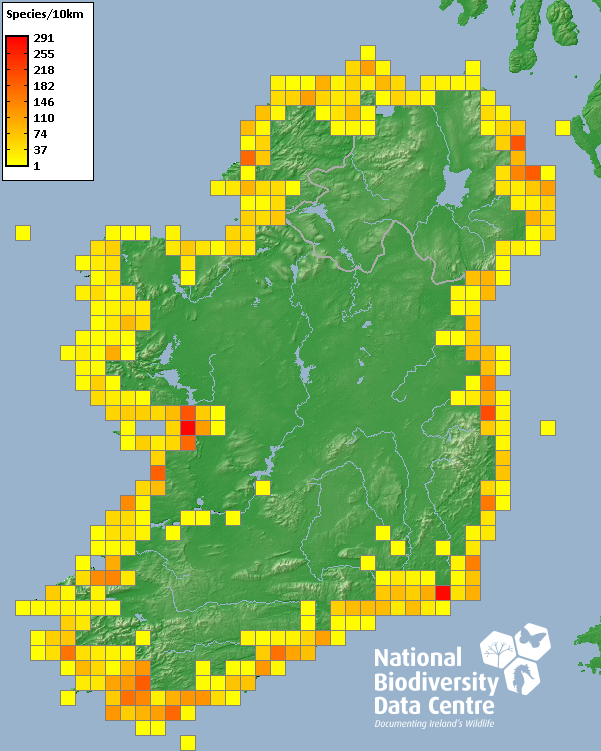
Length: to 22 mm (up to 14 mm broad) Tegmentum colour: orange to brick red, often with white markings, or with shades of green, bright yellow, or bright orange. Sculpture: smooth and glossy to the naked eye, diagonal ridges set with black dots (the pigment cups of the ‘shell-eyes’ or ocelli); under magnification the valves are sculptured with small granules arranged in quincunx Girdle: wide (about 1/3 of the animal’s width) and covered in spicules, with a short marginal fringe of spicules. The girdle is coloured yellow or orange with red markings. Bathymetric range: shallow subtidal to 1000 m (usually from 10-100 m) Geographic range: uncommon, but distributed on all coasts of Europe from Scandinavia and the Shetland Islands to the Meditteranean and the Red Sea. Similar species: Tonicella marmorea
Taxonomy and Synonymy: ORDER: Callochitonida Giribet & Edgecombe, 2020 FAMILY: Callochitonidae Plate, 1901 GENUS: CALLOCHITON Gray, 1847 Callochiton septemvalvis (Montagu, 1803)
List of synonymised names available at:
|
|